How different is Labour’s ‘new’ Border Security Command from the Conservatives’ ‘new’ Illegal Migration Operations Command or the previously ‘new’ Clandestine Channel Threat Command? While this question does the media round, there are other aspects of Labour’s proposal to address irregular crossings that are attracting less attention.
Slightly hidden in the proposal, there is one aspect that is genuinely positive and hopefully they will stick to it (unfortunately they have a bit of a record at U-turning on more progressive policy ideas): asylum claims will be assessed for their merits again, irrespective of how people entered the UK. This goes in the opposite direction from the Rwanda Plan. Nothing really radical, but given the current direction of travel, it is a welcome change of direction.
However, as long as #stoptheboats remains at the centre of the debate on asylum – right-wing media and the UK gov have been incredibly successful in establishing this as a priority in public opinion (as many opinion polls show) – the room for manoeuvring for a Labour government is very limited.
What is needed most is a concerted effort to establish their own more positive narrative on asylum. It is not easy (not sure they really want either), but it can be done. Irregular crossings can’t just be ignored, especially because the right-wing media are very unlikely to let them go as a topic, but they shouldn’t dictate the agenda on asylum. Labour can learn from the very positive public response to the arrival of Ukrainian refugees as an example of what can be achieved when the public is with you.
There are also other (less positive) aspects they may want to learn from the humanitarian visa scheme. For a discussion of humanitarian visas and safe and legal routes to asylum, see our recent MIGZEN report in which we examine how, in the context of the UK’s post-Brexit migration regime and its increasing restrictions on the right to claim asylum, the opening up of bespoke routes for Hong Kongers and Ukrainians to migrate to the UK on humanitarian grounds is often framed as evidence of the UK government’s commitment to provide international protection for the most vulnerable.
For an analysis of the plight of the UK’s asylum system and who is responsible for the current situation see this piece Michaela Benson and I wrote for The Conversation debunking key myths about Britain’s ‘broken asylum system’. I returned to discuss the so-called (by the people who broke it) ‘broken asylum system’ in this piece for Transforming Society .
Finally, the conversation on migration is dominated by words like irregular crossings, illegal migration, irregular migrants, etc.. They are often taken at face value, no question answered. If you fancy some questions and answers, Stefano Piemontese and I look at the mechanisms – the legal and policy infrastructures – that turn some forms of migration and some migrants into irregular. in a new I-CLAIM report.
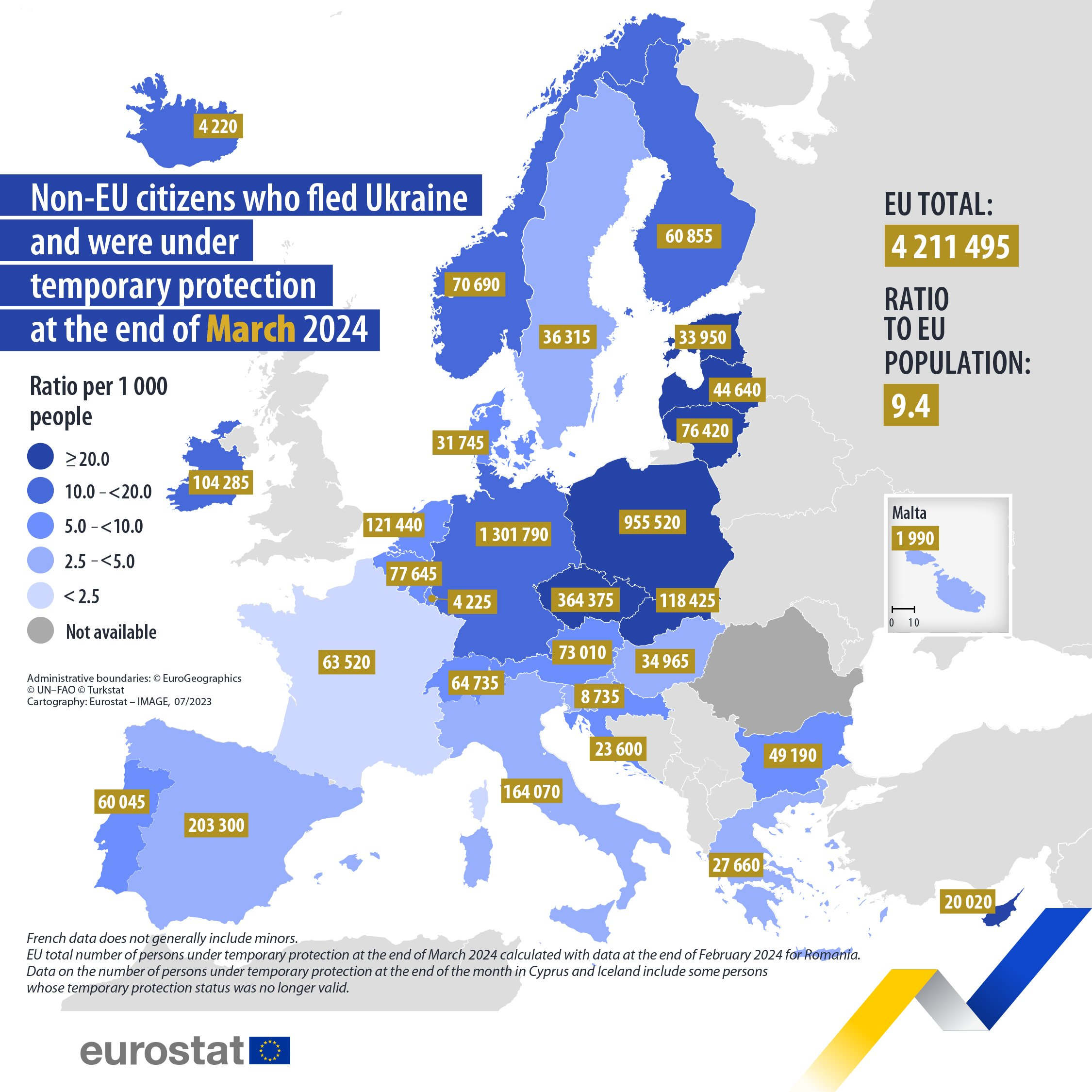
Just a footnote on the UK’s ‘generosity’ towards Ukrainian refugees: according to Eurostat, the EU is currently hosting 4.2m Ukrainians who fled the war. Germany alone hosts 1.3m refugees from Ukraine. Less than 200k Ukrainians are temporary protected in the UK